Many digital health projects begin with a technology. Blue Route began with a consultation, a concerned family, and a diagnosis that came too late.
That clinical starting point is what makes Blue Route a success story of the GooVentures Venture Studio: a project born from a real need that has evolved into a digital health startup with validation, public funding, national recognition, and growing international interest.
At GooVentures, we believe technology only makes sense when it serves human well-being. For more than a decade, we have co-created solutions alongside hospitals, medical institutions, universities, and research centers to transform real-world challenges into tangible impact.
Origin of Blue Route: Identifying a Structural Gap
La Ruta Azul (Blue Route in Spanish) is a pediatric clinic specialized in child neurodevelopment. Founded in 2015 in Pontevedra by Dr. Alfonso Amado, a pediatrician specialized in neurodevelopmental disorders, its origins are deeply rooted in clinical practice and daily interaction with families. The clinic has become a reference in the field of Autism Spectrum Disorder (ASD), focusing on diagnosing and treating these conditions in an inclusive, effective, and person-centered way.
Building on lessons learned from previous initiatives in neurodevelopment and pediatrics, the Blue Route team began to identify a recurring pattern: most children were receiving an ASD diagnosis too late. Not due to a lack of concern from families, but because the system is not designed for early or accessible detection.
From the consultation room, it became clear that early detection could no longer depend exclusively on long, fragmented, and difficult-to-access pathways. A new approach was needed—one that could identify early warning signs and support families from the very beginning, not by replacing healthcare professionals, but by expanding their capacity to act.
The Problem: Late Diagnosis Comes at a High Cost
Detecting a neurodevelopmental disorder early can make a decisive difference in a child’s developmental trajectory. In the case of ASD, clinical evidence is clear: the earlier the intervention begins, the greater the likelihood of improving communication, social, and functional skills.
During the first years of life—especially between ages 2 and 5—the brain undergoes its highest level of plasticity. It is during this period that intervention can generate meaningful structural changes in neurological development. Yet this window of opportunity is not always fully utilized.
In Spain, approximately 2% of children under the age of five have ASD—around 40,000 children. Although parental concern often arises between 18 and 22 months of age, the definitive diagnosis typically arrives between ages 3 and 4. This nearly two-year gap consumes much of the most impactful intervention period.
Structural Barriers That Delay Intervention
The causes are multiple and interconnected. Early warning signs may be minimized or interpreted as normal variations in development. Referrals are delayed. When families finally access specialized services, they face waiting lists that in some regions exceed 6 or even 12 months for an initial evaluation. This is compounded by fragmentation across levels of care and territorial disparities in access to early intervention services, which in some communities are limited to children under age three—leaving many outside the public system.
The consequences are not only clinical, but also social and economic. Many families turn to private therapies, with costs that can exceed €200 per month, creating inequality in access. Meanwhile, without early intervention, the likelihood of requiring more intensive and long-term support increases significantly.
This is not an isolated failure or a case of poor management. It is a structural gap: the system is not designed to provide early, accessible, and scalable screening that enables action when it can have the greatest impact.
The Solution: Technology to Expand the Capacity of the Healthcare System
In response to this scenario, Blue Route began exploring how technology could help bridge this gap without replacing clinical judgment. The goal was not to automate diagnosis, but to facilitate early detection and provide professionals and families with a tool to identify risk signals in an agile, objective, and accessible way.
The proposed solution combines three core elements:
- A guided initial autoscreening for families
- Behavioral pattern analysis through video and artificial intelligence algorithms
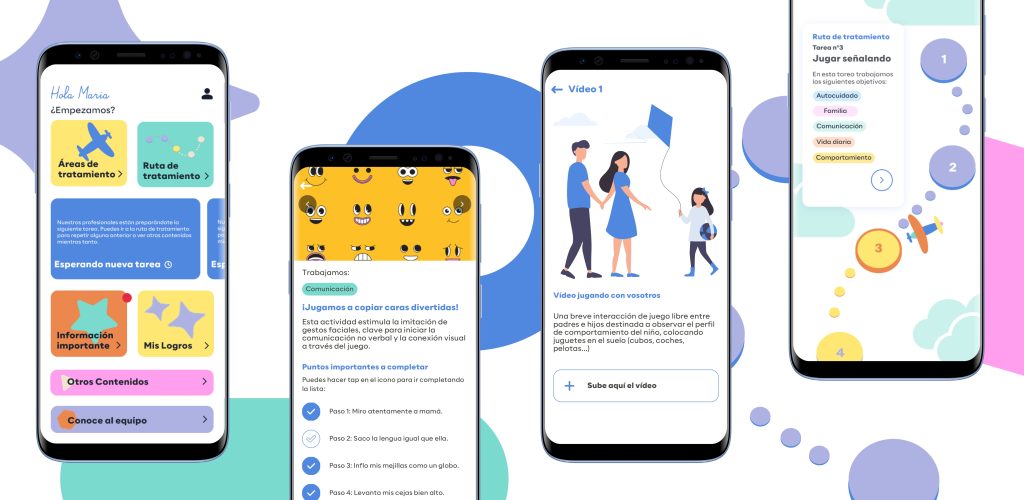
- The creation of personalized intervention pathways tailored to each child
Compared to a traditional diagnostic process—which can exceed €700 and take two to three months—Blue Route offers an initial diagnostic assessment for approximately €300 with immediate results. The model is complemented by a digital therapy subscription priced at €100 per month, reducing the typical cost of these interventions by half.
Because it works with highly sensitive data—including health information and audiovisual material from minors—Blue Route has incorporated a privacy-by-design and privacy-by-default approach from the outset. The platform applies advanced technical safeguards such as encryption, strict access controls, and data pseudonymization to ensure confidentiality and responsible data use. All data processing complies with the GDPR and applicable Spanish regulations, requiring explicit consent from the child’s legal guardian.
In this way, the solution not only reduces time and cost, but also minimizes friction in accessing an initial assessment—while maintaining strong guarantees around privacy and data security.

From Challenge to Venture Building: Building with Rigor from Day One
With this idea, the project was submitted in 2024 to the AI & mHealth Challenge, the innovation competition launched by GooApps® and GooVentures to identify digital health solutions with real impact. The proposal was selected as the winner, receiving €30,000 in technology development funding and, more importantly, an initial external validation that the approach made clinical, technological, and social sense.
That recognition marked a turning point. Blue Route was no longer just an initiative born in the consultation room—it began the journey toward becoming a digital health startup.
Winning the AI & mHealth Challenge validated the concept, but transforming a clinical hypothesis into a real digital solution required more than technological development. It demanded structure, focus, and a deep understanding of the healthcare environment.
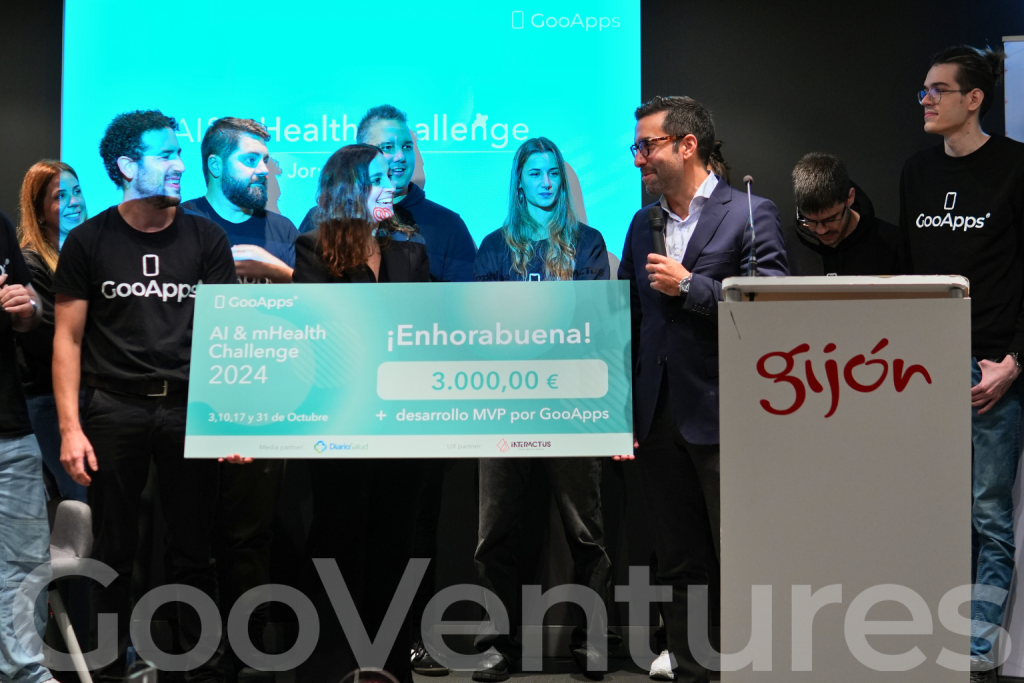
From that point on, GooApps® and GooVentures joined the project with the goal of supporting Blue Route through the venture-building process—reducing risk from the outset and building a solid foundation for growth.
During this phase, work progressed on multiple fronts in parallel. On one hand, the team focused on designing and developing a robust technology platform built to scale and operate within a regulated environment. On the other, they worked on defining the business model, conducting clinical validation, and outlining the regulatory roadmap required to operate as a medical device.
This period—the “messy middle”—was critical in transforming the initial vision into a structured project. What began as a promising idea evolved into Blue Route: a startup under construction with a clear strategy and an unchanged mission—to democratize access to early diagnosis and intervention in childhood neurodevelopmental disorders.
Real-World Validation: When Data Confirms the Hypothesis
One of the key milestones in Blue Route’s development was demonstrating that the solution worked in a real-world setting. To do so, the team launched a proof of concept along with an autoscreening questionnaire designed for families with children between one and five years old.
During the validation phase, more than 8,000 users visited the platform, with a test completion rate exceeding 30%—a particularly meaningful figure in a sensitive context such as child health. Eighty percent of cases fell within the target age range, and 31% showed elevated risk indicators.
Additionally, 63% of families expressed interest in accessing online therapies following the initial assessment. This early validation confirmed that Blue Route not only addressed a genuine clinical need, but also demonstrated strong potential in terms of adoption, impact, and scalability.
| Metric | Result |
|---|---|
| Website Users | 8,027 |
| Total Sessions | 10,138 |
| Tests Completed | 2,693 (33% completion rate) |
| Target Age (1–5 years) | 80% |
| High Risk Detected | 31% |
| Willing to Access Online Therapy | 63% |
| Newsletter Sign-ups | 381 |
| Call Requests | 23 |
Artificial Intelligence in Service of Professionals and Patients
Following its initial validation and the growing interest in the platform, Blue Route is now focused on scaling its capacity without compromising clinical rigor. The goal is not to replace healthcare professionals, but to equip them with tools that enable them to better prioritize, analyze, and support each family—both in diagnosis and in defining the appropriate therapy. Identifying risk is only the first step; real impact happens when diagnosis leads to effective intervention.
The platform’s evolution includes the progressive implementation of personalized artificial intelligence at three levels:
- Initial risk classification based on the autoscreening process
- Structured analysis of behavioral videos using advanced computer vision models
- Generation of personalized intervention proposals that support clinical decision-making
This development, planned throughout 2026, aims to reduce evaluation times and ease clinical workload, while keeping professional supervision and validation at the center of the process.
Strategic Partnerships and CE Marking
Alongside its internal development, Blue Route is exploring the integration of third-party technologies as part of its responsible growth strategy. One example is its relationship with Cognoa, the U.S.-based company behind Canvas Dx, the first FDA-approved AI diagnostic tool for autism in children aged 18 to 72 months. Since 2025, the team has been assessing potential collaboration pathways to integrate this technology into the Spanish and European markets.
Once the AI models are fully implemented and clinically validated, the next step will be obtaining CE marking as a medical device in Europe. This milestone is essential for commercializing the tool as a diagnostic solution and ensures compliance with European standards for safety and effectiveness.
To achieve this, the Blue Route team is already working on implementing a quality management system specific to medical devices, conducting clinical validation of its AI algorithms, preparing comprehensive technical documentation and full system traceability, and coordinating with the AEMPS (Spanish Agency of Medicines and Medical Devices).
Milestones Achieved: From Development to Institutional Traction
In just over a year, Blue Route has evolved from an initiative born in the consultation room into a validated digital health startup with funding and growing visibility within the innovation ecosystem. Some of the key milestones achieved to date include:
- AI & mHealth Challenge 2024: Winner of the innovation challenge launched by GooApps® and GooVentures, receiving €50,000 in technology development support.
- APTE Top 100 Startups 2025: Selected among the 100 most promising startups from Spain’s science and technology parks.
- Gijón Impulsa Awards 2025: Candidate in the Health and Healthy Living Innovation category.
- Plan Investigo Asturias (SEPEPA): Public grant awarded to hire three research profiles, strengthening the project’s scientific and clinical foundation.
- Total Funding: More than €400,000 secured, including €200,000 in private investment for development and €200,000 in approved public funding.
- 4YFN / Mobile World Congress 2026: Participation as co-exhibitors at the Asturias (ASTUREX) stand, March 2–5 in Barcelona.
- App Launch: Official release on app stores during 4YFN, March 2026.

Founding Team and Key Profiles at Blue Route
Dr. Alfonso Amado – Co-founder & Clinical Lead
Specialist in Pediatric Neurology and PhD in Medicine from the University of Santiago de Compostela, with a Master’s in Pediatric Neurology and Neurodevelopment. Founder of La Ruta Azul and Pediatric Neurology Specialist at the University Hospital of Vigo, he combines clinical practice, research, and the application of new technologies to improve patient outcomes.
Eric Garcia – Co-founder & CTO
CEO of GooApps® and founder of GooVentures, he leads the technological architecture and scalability strategy of Blue Route. Specialized in developing digital solutions within regulated environments, he ensures that the clinical vision is translated into a robust, interoperable product built for growth.
Lorena González – Speech Therapist & Neuroscience Researcher
Holds a degree in Speech Therapy (UniOvi) and a Master’s in Learning Difficulties and Language Disorders (UOC), with clinical experience at HUCA and the SESPA Stroke Unit. Specialized in dyslexia, language disorders, and ASD, she brings scientific rigor and hands-on clinical expertise to the model’s development.
Pelayo Álvarez – AI Engineer in Digital Health
Holds a double degree in Physics and Mathematics, a Master’s in Astrophysics (UCM), and a PhD in Computer Engineering (UniOvi), including a research stay at the NIH (USA) and publications in Nature and Nature Communications. He leads the development of AI models applied to behavioral video analysis.
Elsa Vilabella Serrano – Medical Device Regulation & Quality Technician
Holds a degree in Biochemistry and a Master’s in Cancer Therapies (University of Strathclyde, UK), with experience in gene therapy production for rare diseases and advanced laboratory techniques. She is responsible for regulatory compliance and the preparation of CE marking.
GooVentures – Strategic Venture Builder
Through GooVentures, the project benefits from strategic support in fundraising, corporate structuring, and scaling—guiding the evolution of La Ruta Azul from a clinical initiative into an internationally oriented digital health startup.
In parallel with these milestones, the Blue Route team is currently undergoing validation at the Galicia Sur Health Research Institute (IISGS), incorporating key profiles for its next phase of growth.
These include professionals in neuroscience, psychology, and speech therapy, a Data Scientist specialized in artificial intelligence applied to digital health, and a medical device regulation technician—an essential combination to advance with rigor in a highly regulated environment and prepare for the launch and scaling of the solution.
Clinical Expertise + Applied Technology = Real Impact
Blue Route is a clear example of how the combination of clinical expertise and well-applied technology can lead to solutions with real impact. A project born from day-to-day clinical practice that, with the support of GooVentures, has evolved into a solid, validated startup built to scale.
More than an isolated case, it represents the model we follow at GooVentures: identifying real needs, co-creating alongside industry experts, and building startups with rigor from day one—especially in complex environments such as healthcare.
Through our Venture Studio, we back projects that put technology at the service of people, transforming specialized knowledge into scalable and sustainable solutions.
If you are interested in collaborating with the project or exploring investment opportunities, please get in touch with our team.
—
Would you like to meet the Blue Route team and learn more about the project in person? Visit us from March 2–5 in Barcelona at 4YFN / Mobile World Congress, at the ASTUREX stand.
For more information, you can contact us at [email protected] or visit our website at blue-route.ai.
The app is now available for download on the App Store and Google Play.
 Europe Office